How to Grow Potatoes in a 5-Gallon Bucket (and Why Yours Got Too Hot)
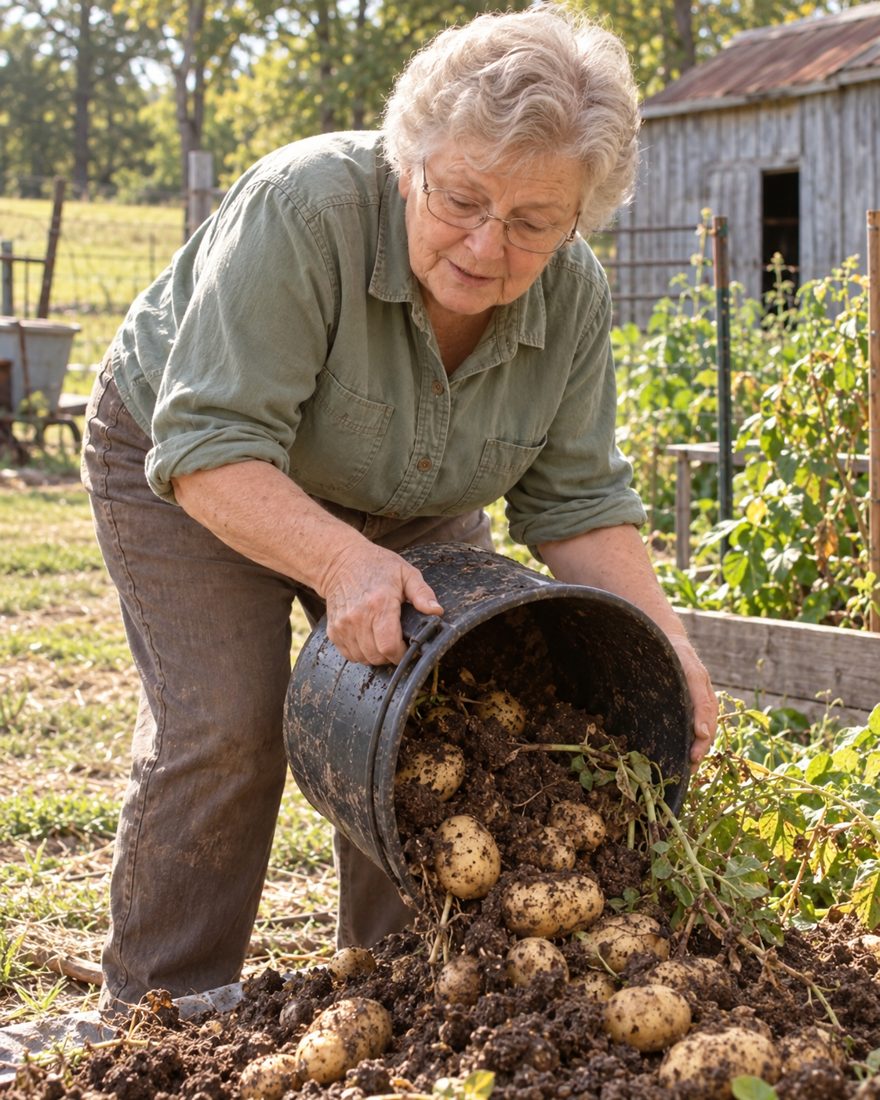
If you grew potatoes in a bucket last summer and tipped it out to find a handful of marbles, I can tell you what most likely went wrong. It wasn't the size of the bucket. It was the heat.
Growing potatoes in 5-gallon buckets is one of the easiest ways I know to get a crop with no digging and no kneeling, and I keep a few on my back porch every spring. But a dark bucket in the sun cooks the roots, and a potato that's too hot simply quits making potatoes. Here's how I grow them, what one bucket really gives you, and whether it saves you a dime.
Why Your Bucket Potatoes Came Up Small
A potato plant will grow leaves happily through the heat. Making potatoes is another matter. The young potatoes form and swell best when the dirt around them is roughly 60 to 70 degrees. Once the dirt climbs into the eighties, it stops making potatoes and just grows leaves.
In the ground, dirt stays cool a few inches down. A bucket gets no such protection, and black plastic in the afternoon sun soaks up heat like a cast-iron skillet.
One afternoon in early June, right when my bucket potatoes were swelling, I pushed a thermometer two inches into three buckets on the porch. The black one in full sun read 97 degrees. A white one beside it read 85. A white one that only got morning sun, with straw on top, read 74. Same day, same kind of potato. You can guess which one filled a basket.
Keep the roots cool and let the leaves have the sun.
What You Need
- One 5-gallon bucket per plant, light-colored if you can get one. Drill six or eight half-inch holes in the bottom and a few more low on the sides. A bucket with no holes will drown the crop and rot it.
- Potting mix, not garden dirt. Clay in a bucket bakes into a brick. I use half bagged potting mix and half my own leaf mold or compost.
- One seed potato piece per bucket. Buy certified seed potatoes and pick an early kind like Red Norland or Irish Cobbler, which make their potatoes before the worst heat. Plant a small one whole. Cut a big one into egg-sized pieces with two or three eyes each, and let them dry a day or two first.
- A little straw for the top.
Skip the potatoes from the grocery sack. Most are treated to keep them from sprouting on the shelf, and the ones that do come up are weak. Certified seed is also checked for disease. Grocery potatoes are not.
How to Plant Potatoes in a Bucket
- Plant early. Two to four weeks before your last frost, once the mix is about 45 degrees or warmer. Here that's mid-March to early April. On a frosty night, you can drag a bucket into the garage.
- Put 4 to 6 inches of damp mix in the bottom. Set the seed piece on it, cut side down, sprouts up.
- Cover it with 3 or 4 inches of mix and water it in.
- Add mix as it grows. When the stems are 6 to 8 inches tall, add mix around them, leaving the top few inches of leaves showing. Keep going until the mix is two inches from the rim. This keeps light off the new potatoes so they don't turn green.
- Mulch the top with 2 or 3 inches of straw or shredded leaves once the bucket is full.
How to Keep a Bucket Cool
- Morning sun, afternoon shade. The east side of a house or porch is ideal. The leaves want six hours of sun, but the bucket doesn't need the hot afternoon ones.
- Double up. If all you have is a dark bucket, stand it inside a bigger one. The air gap between the walls keeps the dirt a good deal cooler.
Water Steady, Not Often
A bucket holds very little dirt, and on a hot, breezy day it can dry out by supper. Let it go bone dry and then flood it, over and over, and you'll dig knobby potatoes, cracked ones, and ones hollow in the middle. Dry spells as they start forming also invite scab.
So push a finger into the mix each morning, down to the second knuckle. Dry down there? Water slowly until it runs out the bottom. Damp? Leave it be.
And don't bother with a tower
A potato makes its potatoes in one band, roughly a foot above the seed piece, and no higher. Keep burying the stem in a tall tower and the early kinds mostly just grow roots. Earl built me a tower of scrap boards one spring. We tipped out eleven potatoes and a great tangle of roots. A plain bucket is already the right depth.
How Many Potatoes From One 5-Gallon Bucket?
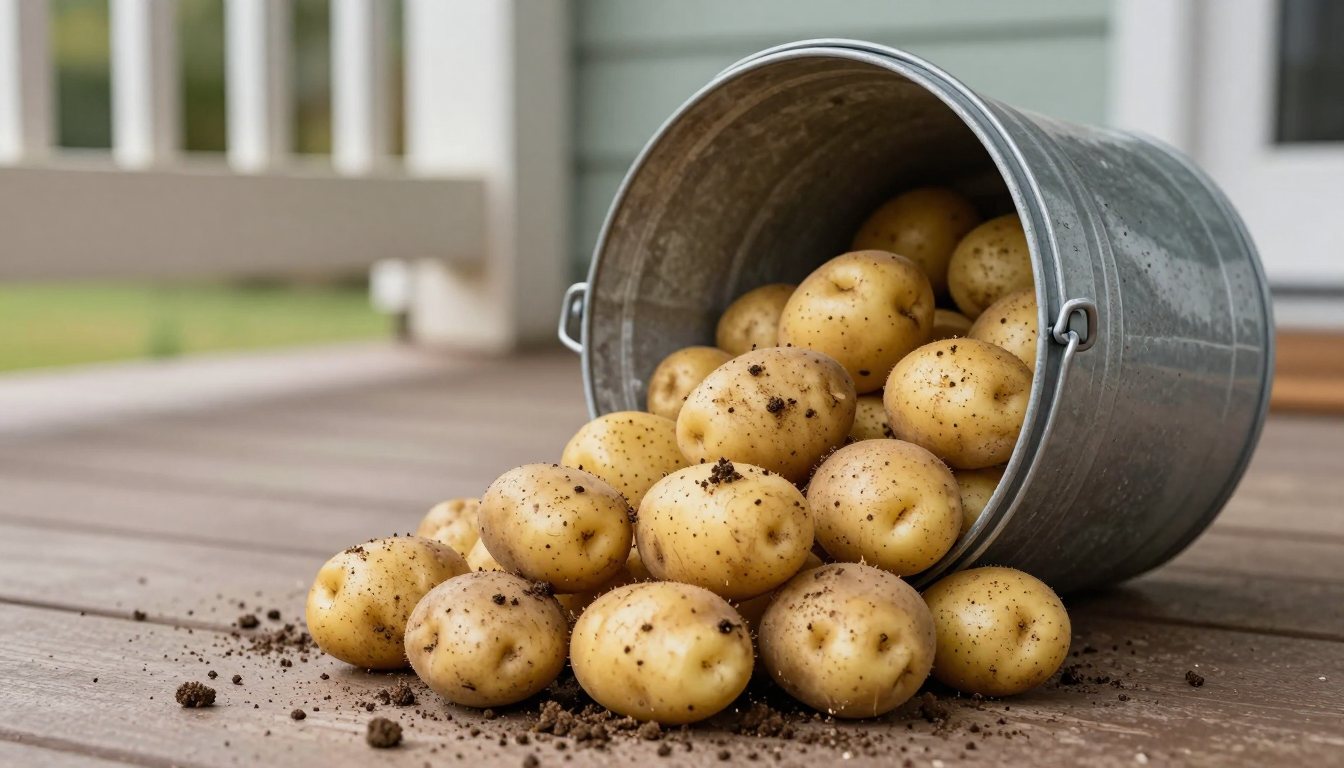
Here's where I'll be plain, because the pictures online won't be. One seed piece in a five-gallon bucket, done right, gives you about two to three pounds of potatoes. A very good year, maybe four. Not twenty.
Harvest when the leaves yellow and die back, usually 70 to 90 days after planting for the early kinds. For new potatoes, reach in along the side a couple of weeks after it flowers and steal a few. At the end, tip the bucket onto a tarp and sift through it with your hands. No fork through your best potato, and no kneeling. That's the real reason to grow them this way.
Does a Potato Bucket Save You Money?
I'll be honest. Potatoes are one of the cheapest things in the store.
That's close to break-even. If saving money is the goal, give most of your buckets to tomatoes, peppers, greens and herbs. Ten buckets of the right crops on a porch are worth about $260 a year, and potatoes would pull that down. I grow a few anyway. A potato dug that morning tastes like nothing in a sack, and my great-grandchildren will eat any potato they tipped out themselves.
I've shown all this on my YouTube channel, Ruth's Garden. If you'd like to know which crops do pay you back, my free Grocery Value Chart, the 10 vegetables that save you the most money spells it out. And the full plan for a garden that feeds you is in my book, Grandma Ruth's Grocery Garden.
Questions Folks Ask Me
How many potatoes can you grow in a 5-gallon bucket?
Plant one seed potato piece per 5-gallon bucket. Done right, it gives about two to three pounds of potatoes, and up to four in a very good year. Crowding in more seed pieces gives you more small potatoes, not more pounds.
Why are my bucket potatoes so small?
Usually heat. Potatoes form best when the soil is about 60 to 70 degrees and stop forming once it reaches the eighties, and a dark bucket in full sun gets far hotter. Uneven watering, too many seed pieces and sprout-treated grocery potatoes also shrink the harvest.
Do potato buckets need drainage holes?
Yes. Drill six to eight half-inch holes in the bottom of each bucket and a few more low on the sides. Without them, water pools in the bottom and the seed potato rots.
When do you harvest potatoes grown in a bucket?
Harvest when the leaves turn yellow and die back, usually 70 to 90 days after planting for early varieties. For new potatoes, feel along the side of the bucket a couple of weeks after flowering. Tip it onto a tarp and sort through by hand.
Free: Ruth's Grocery Value Chart
The 10 vegetables that save you the most money, and the 5 that never will.
Send Me the Chart