How I Make Free Garden Soil From Fallen Leaves (No Bags, No Turning)
Every November I watch the neighbors rake their yards, stuff the leaves into paper sacks and set them at the curb like trash. Then in April those same neighbors drive to the store and pay six dollars a bag for something to improve their garden dirt. Honey, they had it in the front yard the whole time.
What those leaves turn into is called leaf mold. Some old books spell it leaf mould. Same thing. It's the dark, crumbly, sweet-smelling stuff under the leaf litter on the floor of any woods. I've made it every fall since the early seventies on thin, rocky, acid red clay, and it's the closest thing to free garden soil I know of. Here's how to make leaf mold with no store bags, no turning and next to no work, and what it's honestly worth.
What Leaf Mold Is, and What It Isn't
Leaf mold is not compost, and that matters. A compost heap is run by bacteria. They want a mix of green and brown, they work hot, and they want turning. Leaf mold is run by fungus, the fine white threads you see under a wet mat of old leaves. Fungus works cold and slow, and asks nothing of you but water.
That's why a big load of leaves stalls a compost pile. Dry leaves are nearly all carbon, about sixty parts carbon to one part nitrogen, and a compost heap wants closer to thirty to one. Dumped in alone, they just sit. Given a corner of their own, they turn to crumb.
I'll be straight with you about one more thing. Leaf mold is not a fertilizer. There's very little plant food in it. What it does is fix the dirt itself. It opens up heavy clay so water and roots can get in, and it helps sandy ground hold water like a sponge.
You can't fight this ground. You can feed it.
How to Make Leaf Mold, Step by Step
You need leaves, water and a spot you won't look at much. That's the whole shopping list.
- Gather the leaves. Oak, maple, elm, sycamore, hickory, whatever falls in your yard. If the neighbors have sacks at the curb, ask for them. Nobody has ever told me no.
- Shred them if you can. Run the lawn mower over the pile a time or two. Whole leaves take about two years to break down. Shredded leaves take six months to a year, and they pack into a fraction of the space.
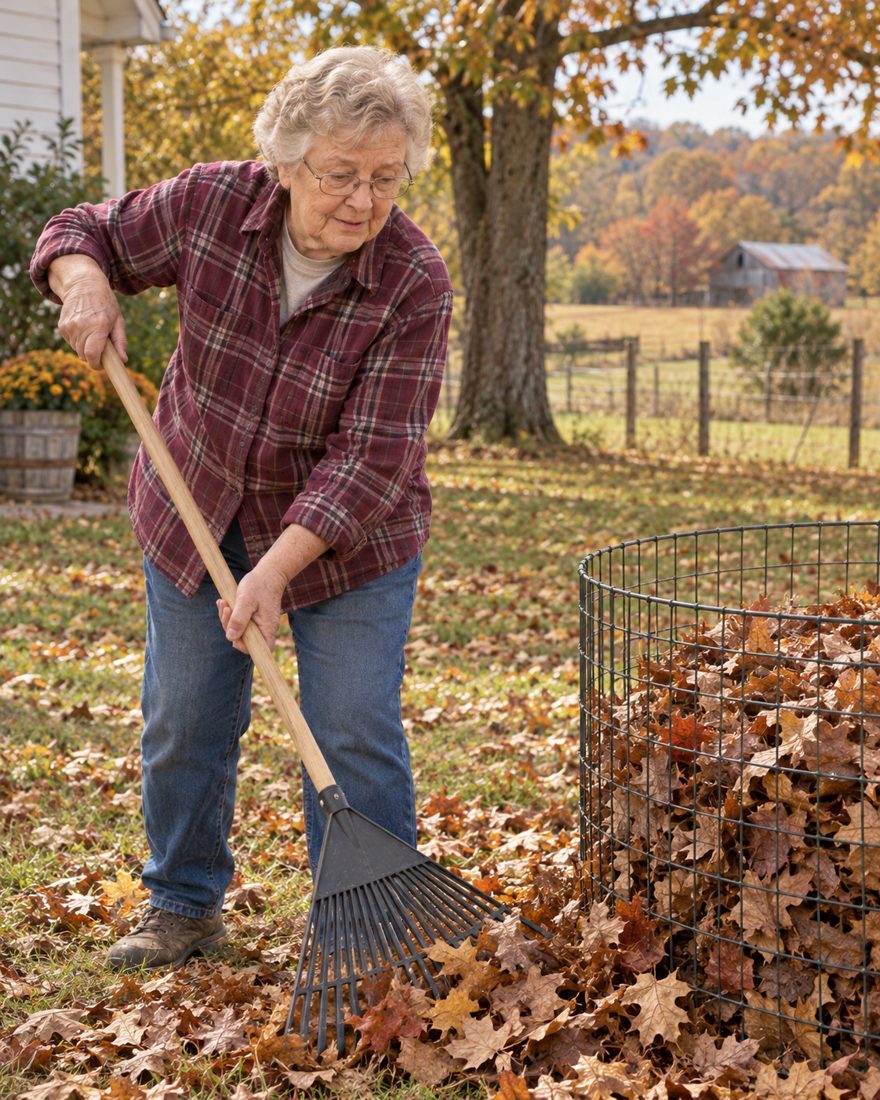
- Pick a holder. I use a ring of old wire fencing three or four feet across, held up with a few stakes. A black trash bag with a dozen holes poked in it works just as well tucked behind the shed. The leaves don't care.
- Soak them. This is the one step you can't skip. Wet the leaves right through as you pile them, a layer at a time, until a handful feels like a wrung-out dishrag. Fungus can't work in dry leaves. A dry pile will sit for years looking exactly the same.
- Walk away. No turning, no feeding, no stirring. Fall and winter rain will mostly keep it damp. In a long dry spell, give it a drink from the hose.
When my three were small, I paid them a nickel a sack to rake the yard into my wire rings. It was the cheapest soil I ever bought, and it bought me a quiet afternoon besides.
How to Tell When Leaf Mold Is Ready
You won't need a calendar. Your hands will tell you.
- At about six months it still looks like leaves, only darker, flatter and soggy. The pile will have sunk to half its height or less.
- At a year for shredded, or two for whole, the leaf shapes are gone. A handful falls apart in your palm like chocolate cake.
- It smells like the woods after a rain. Not sour, not rotten. If it smells sour, it's packed too tight and waterlogged. Fluff it once with a fork.
The top layer always lags behind because it dries out. I scoop the good stuff from underneath and toss the top onto this year's new pile.
Three Ways I Use It
As mulch on the beds
Year-old leaf mold, still a little flaky, goes on top of the beds two or three inches deep. It holds moisture through a Missouri July, keeps weeds down, and keeps the frost off my garlic roots all winter. Don't bury it. Lay it on top and let the earthworms carry it down. Earl ran a tiller for forty years, and I never did convince him of that.
As seed-starting mix
Two-year leaf mold, rubbed through an old window screen, makes the softest seed-starting mix I've ever used. Seeds don't need feeding. They need something soft and damp to push a root into. A bag of seed-starting mix runs about six dollars, and I haven't bought one in years.
Worked into tired ground
When I open a new bed on my clay, or an old one has gone hard and pale, I fork a few inches of leaf mold into the top before planting. Within a season the dirt is darker and looser, and the worms come back.
What Free Garden Soil Is Worth
A ring heaped full of shredded leaves gives me roughly ten bags' worth of finished leaf mold. Here's what that one ring keeps me from buying.
Between my leaf rings and my compost heap, I never buy the thirty bags of soil and compost a garden my size would eat up. At six dollars a bag, that's $180 a year staying in my pocketbook. That's my own garden at 2026 store prices. Yours will depend on your space and how many trees you've got.
Rake, Wet, Wait
That's the whole job. Rake the leaves into a corner, soak them, and forget them until next fall. If you'd like to see finished leaf mold in the hand, I walk through my wire ring on my YouTube channel, Ruth's Garden.
And if you're gardening to cut the grocery bill, start with my free Grocery Value Chart, the 10 vegetables that save you the most money. The whole plan, from bad dirt to a full cellar, is in my book, Grandma Ruth's Grocery Garden.
Questions Folks Ask Me
How long does it take to make leaf mold?
Whole leaves take about two years to turn into leaf mold. Leaves shredded with a lawn mower take six months to a year. Either way the pile has to stay damp, because the fungus that breaks leaves down can't work in a dry pile.
Is leaf mold the same thing as compost?
No. Compost is made by bacteria from a mix of green and brown scraps, runs hot and needs turning. Leaf mold is made by fungus from leaves alone, works cold and needs no turning. It carries very little plant food. Its value is improving the dirt: loosening clay and helping sandy ground hold water.
Will oak leaves make my soil too acidic?
No. Fresh oak leaves are a little acid, but they lose it as they rot, and finished leaf mold comes out close to neutral. It won't sour your ground. My clay is acid all on its own; the leaves aren't the reason.
Can I make leaf mold in plastic bags?
Yes. Fill black trash bags with wet leaves, shredded if you can, tie them shut and poke a dozen small holes in each. In spring, check that they still feel damp and heavy, and add water if not. Expect finished leaf mold in about a year.
Free: Ruth's Grocery Value Chart
The 10 vegetables that save you the most money, and the 5 that never will.
Send Me the Chart