Epsom Salt on Tomatoes: I Tested It. Here's the Honest Truth.
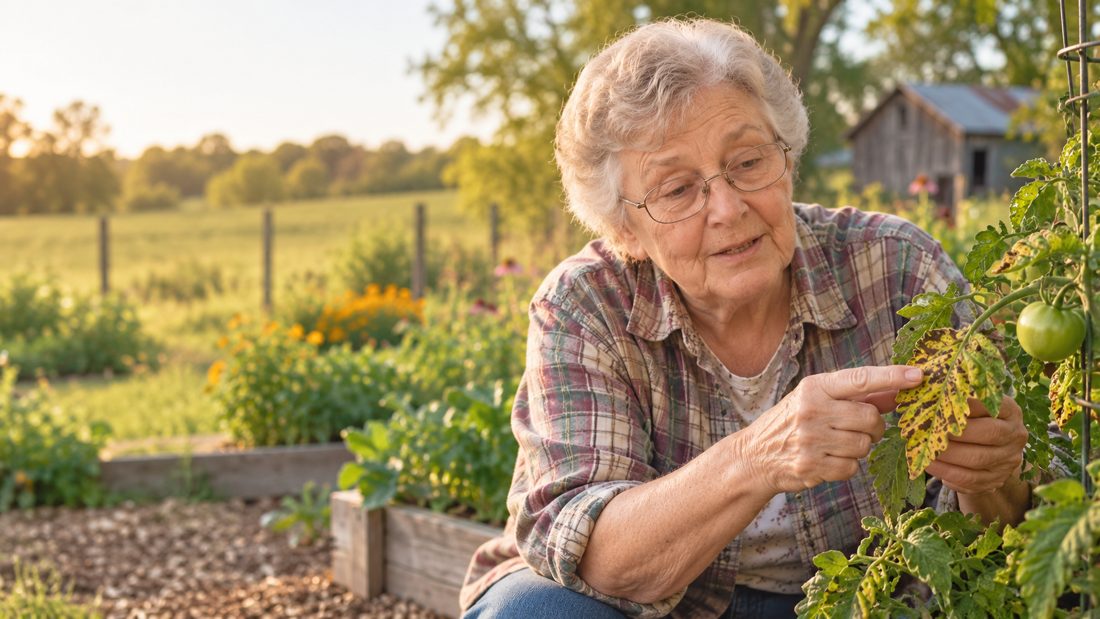
Every spring somebody tells me the secret to big tomatoes is a spoonful of Epsom salt in the planting hole. Some swear it stops blossom-end rot, that black, leathery patch on the bottom of the fruit. Others spray it on the leaves every two weeks to make them greener. Using Epsom salt for tomatoes is one of the most passed-around garden tips there is, and it only costs a few dollars, so why not?
Because for most gardens it does nothing, and for blossom-end rot it can make matters a little worse. I've grown tomatoes on the same rocky clay since 1968, and one summer I ran the test myself. Here's what happened, what Epsom salt really does, and what fixes blossom-end rot for free.
What Epsom Salt Actually Is
Epsom salt isn't table salt. It's magnesium sulfate, which is to say magnesium and sulfur. Plants do need both. Magnesium sits at the center of the green in every leaf, so the idea isn't crazy on its face.
The trouble is that most garden dirt already has plenty of magnesium, and a tomato doesn't need much of it. Thirty years cooking in a school cafeteria taught me you can't fix a pot of beans by adding more of what's already in it. Dirt works the same way. If it isn't short of magnesium, more magnesium buys you nothing.
My Epsom Salt Test
Back in 2014 I planted eight tomatoes in one bed, all the same kind, all from the same flat of seedlings. Four got a tablespoon of Epsom salt in the hole at planting and a spray of a tablespoon per gallon of water every two weeks, just the way the magazine said. The other four got nothing extra. Same dirt, same water, same mulch.
I weighed every tomato on my kitchen scale. Old cafeteria habits die hard.
- The Epsom salt plants: 58 pounds of tomatoes.
- The plain plants: 61 pounds.
- Blossom-end rot: both sides got it on the first few tomatoes after a dry spell in late June, and both sides quit once I got the water steady.
- Leaf color: I couldn't tell them apart, and neither could my daughter when I made her guess.
Three pounds the other way is nothing. That's one plant having a better summer. What it told me is that the Epsom salt didn't earn its keep. That's one garden, mind you, not a university study. But it matches what extension offices have said for years: don't add magnesium unless a soil test shows you're short.
What Really Causes Blossom-End Rot
Blossom-end rot is a calcium problem, but almost never because the dirt is short of calcium. The calcium just can't get to the fruit.
Here's the one bit of science you need. Calcium only travels through a plant with water, and when water runs short, the leaves grab it first and the bottom of the fruit goes without. So a dry week followed by a soaking, or a hot, windy spell that dries the dirt out, and the next tomatoes to swell come up with that sunken black bottom.
That's why it shows up on the first tomatoes of summer and then often quits on its own. And that's why Epsom salt can't fix it. There's no calcium in Epsom salt at all, and a pile of extra magnesium in the dirt actually competes with calcium getting into the roots. The calcium sprays sold for blossom-end rot don't do much either, because calcium put on the leaves mostly stays in the leaves.
Steady water does what the bag promises.
The fix costs nothing
- Mulch. Lay three or four inches of straw or shredded leaves around the plants once the ground has warmed. It keeps the moisture even between waterings.
- Water deep and steady. About an inch a week, rain included, given in one or two good soakings rather than a sprinkle every evening. Push a finger in. If it's dry two inches down, water.
- Don't hoe close. Chopping near the stem cuts the small roots that bring water in. Pull weeds by hand near tomatoes, or let the mulch smother them.
- Go easy on fertilizer. A tomato pushed with too much nitrogen grows big leaves that hog the water, and the calcium with it.
What It Costs to Believe the Myth
That's part of the forty dollars a year in sprays and "miracle" products I never buy. Nineteen dollars to fix a problem the hose and a rake already fix.
When Epsom Salt Does Make Sense
I want to be fair to it. Magnesium deficiency is real. It's just uncommon, and it shows up most on very acid or very sandy ground that's been rained on hard for years.
Here's how it looks on a tomato. The older, lower leaves turn yellow between the veins while the veins themselves stay green, and it creeps up the plant from the bottom. If the lower leaves are yellow all over, that's more likely age, shade or hunger for nitrogen. If they have brown spots with rings inside, like a little target, that's early blight, and no salt will help it.
I'm not one for gadgets. I read my weeds. But if you truly think your dirt is short, a soil test from your county extension office is the honest way to know. It usually runs $15 to $30, depending on your state, and it tells you what's missing instead of leaving you to guess. Ask for magnesium on the report. If it comes back low, Epsom salt is a fine, cheap fix, and the office will tell you how much to use.
My own ground is acid, and acid ground can run short. I lime it every couple of years, and lime labeled "dolomitic" carries magnesium right along with the calcium. That's a bag I'd buy anyway.
The Honest Verdict
For most gardens, Epsom salt on tomatoes is bunk. It won't stop blossom-end rot, and it won't grow bigger tomatoes in dirt that already has enough magnesium. I test tricks like this one on my YouTube channel, Ruth's Garden, and I say plainly which ones work.
If you'd like to know which crops pay you back the most, my free Grocery Value Chart, the 10 vegetables that save you the most money lays it out. Tomatoes are near the top. And the full plan for growing them, along with everything else, is in my book, Grandma Ruth's Grocery Garden.
Questions Folks Ask Me
Does Epsom salt help tomatoes grow?
Only if your soil is short of magnesium, and most garden soil isn't. In soil with enough magnesium, Epsom salt makes no real difference to the size, number or color of your tomatoes. A soil test from your county extension office will tell you whether you're short before you spend a dime.
Does Epsom salt prevent blossom-end rot?
No. Blossom-end rot happens when calcium can't reach the fruit, almost always because of uneven watering. Epsom salt contains no calcium, and extra magnesium can actually compete with calcium uptake. Mulch and steady, deep watering are the real fix.
How do I fix blossom-end rot on my tomatoes?
Mulch around the plants, water deeply about an inch a week instead of light daily sprinkles, avoid hoeing close to the stem, and go easy on nitrogen fertilizer. It often clears up on its own after the first fruits. Affected tomatoes are safe to eat once you cut off the bad end, but don't can them.
How can I tell if my tomatoes need magnesium?
Look at the older, lower leaves. Magnesium-short plants turn yellow between the veins while the veins stay green, and the yellowing climbs from the bottom up. Leaves that are yellow all over usually point to other causes. Confirm with a soil test before adding Epsom salt.
Free: Ruth's Grocery Value Chart
The 10 vegetables that save you the most money, and the 5 that never will.
Send Me the Chart