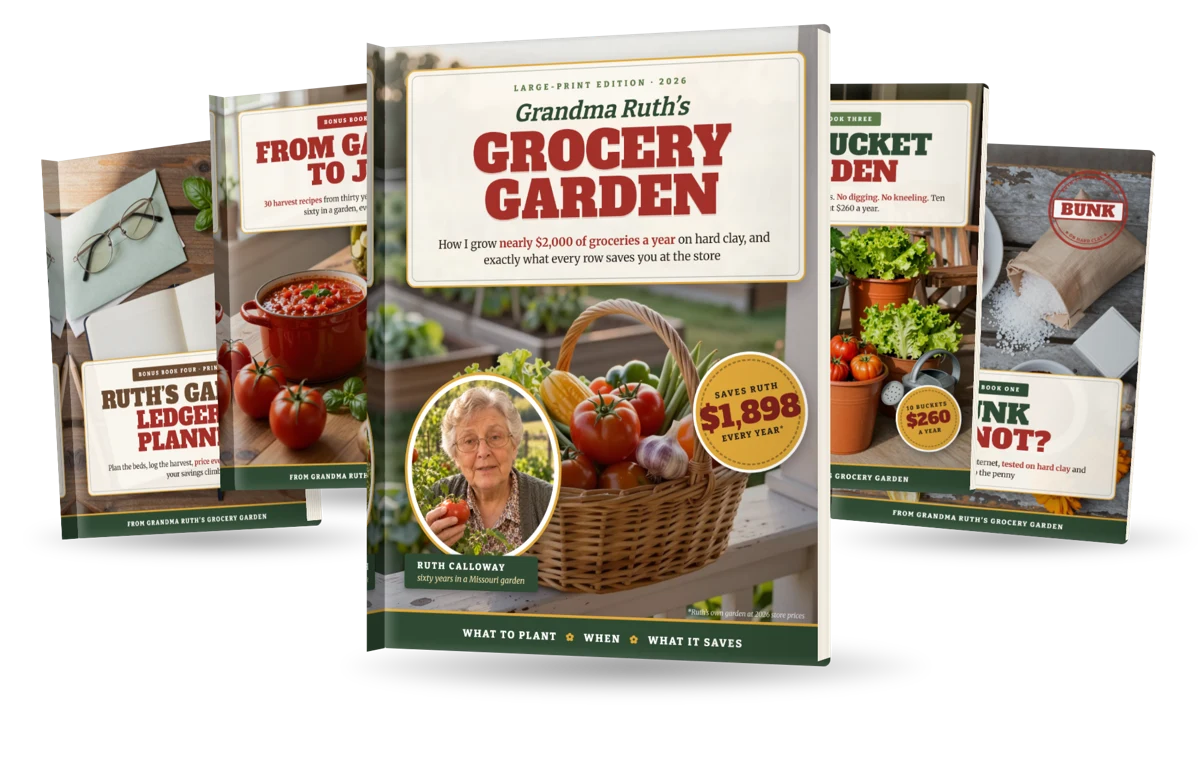
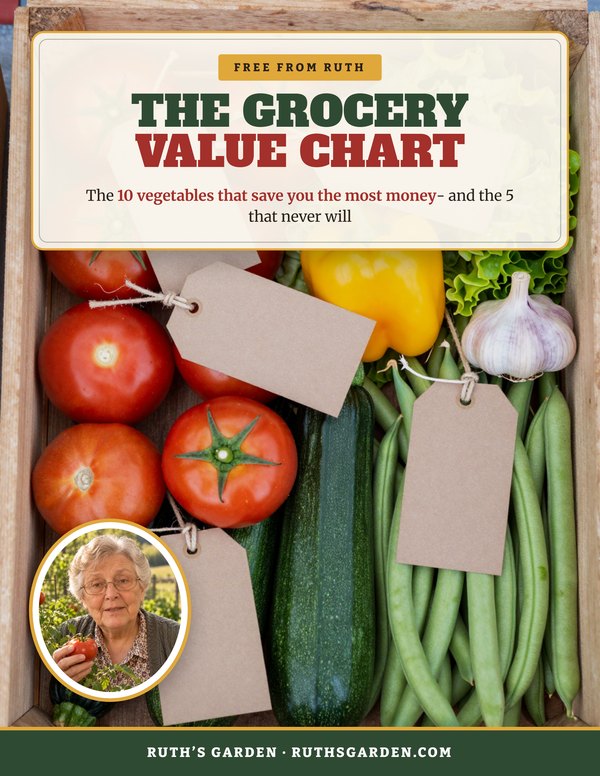
A note from Grandma Ruth,And how you can start this season, in a backyard, one raised bed, or a few buckets on the porch. What to plant, when to plant it, and exactly what every row saves you at the store.
Dear friend,
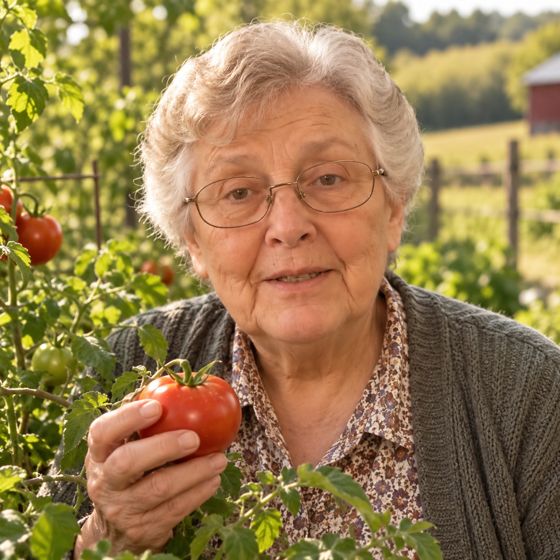
I have kept the same garden since 1968. It sits on the worst dirt you ever saw, thin red clay full of rock, the kind that rings when you hit it with a spade. For most of those years it was not a hobby. It was the grocery bill. Three children, one paycheck, and a garden that had to pull its weight.
Every week now somebody writes to me under one of my videos: "Ruth, groceries are killing me. Where do I even start?" So I sat down at the kitchen table and wrote it all down. Every crop that pays and the ones that never will. How I make soil for free. What I plant each month. And I priced every single thing, because that is the only way I know how to garden.
Last year my garden grew $1,898 worth of groceries and supplies after I took off what I spent. You don't need my garden to start. Ten buckets on a porch will grow about $260 a year. One raised bed, about $350.
I printed it big, so you won't need your glasses. And I told the truth about the tricks you see online, which ones work, and which ones are bunk.
Ruth


Every one of these jobs is in the book, with the month to do it and what it saves you.
Ruth's worked examples at 2026 US supermarket prices. Your savings depend on your space, your season and your effort, the book shows every number so you can check them.
Every basket gets weighed and written down at the kitchen table, priced at the store. Every number in the book is shown like this, crop by crop, so you know what's worth your dirt.
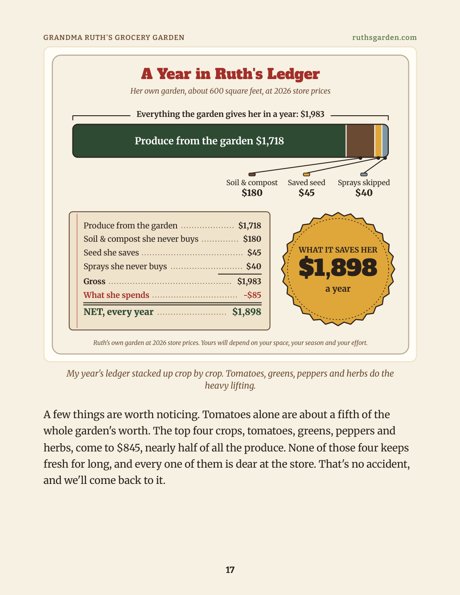
| Crop | What Ruth grows | Worth a year |
|---|---|---|
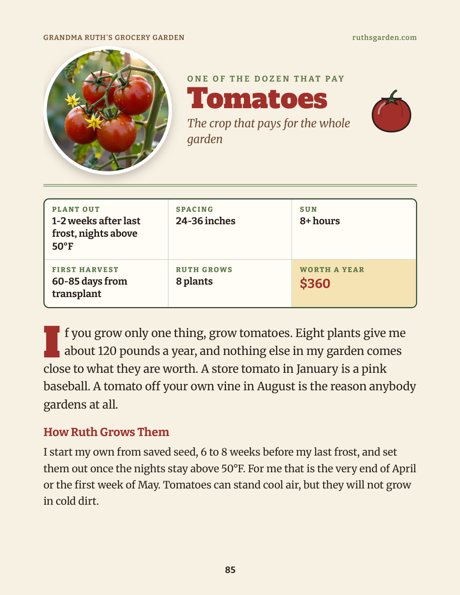
| Tomatoes | 8 plants · about 120 lb | $360 |
| Leafy greens | 2 beds, spring & fall | $180 |
| Peppers | 8 plants · about 120 peppers | $155 |
| Herbs | 6 pots and a border | $150 |
| Green beans | two 15-ft rows, sown twice | $140 |
| Summer squash & zucchini | 4 plants | $137 |
| Winter squash | 4 hills | $134 |
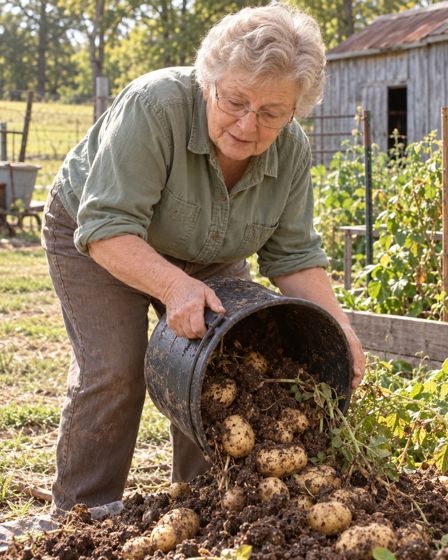
| Potatoes | two 20-ft rows | $120 |
| Okra, sweet potatoes, cucumbers, garlic, onions | the rest of the dozen | $342 |
| Soil, seed & sprays she never buys | leaf mould, saved seed, honest fixes | $265 |
| What she spends in a year | seed she can't save, twine, a few starts | −$85 |
| What the garden saves Ruth every year | $1,898 | |
Ruth's whole ledger, which crops pay the most per square foot, and the five that are never worth growing.
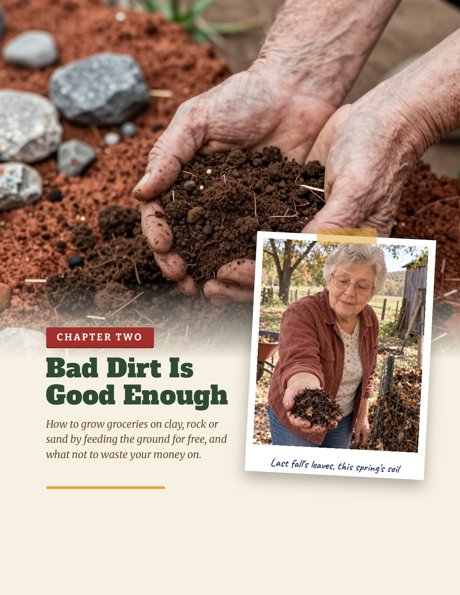
Know before you digFree soil on clay, rock or sand: the leaf ring, no-dig beds, and reading your weeds instead of buying soil tests.
Saves about $180 a yearThree garden plans drawn out, one bed, a family plot and Ruth's own, plus frost dates made simple.
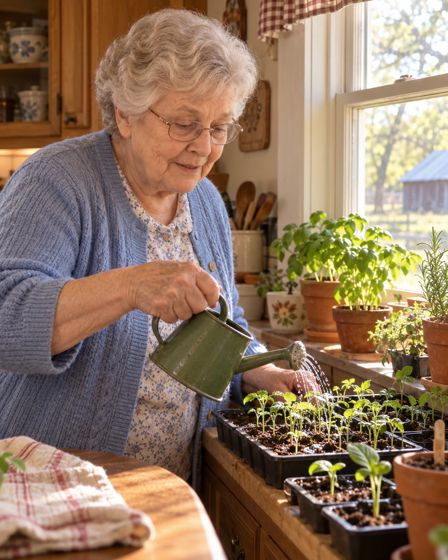
Plans worth $350 to $1,898Starting seeds in free containers, saving your own, and which kitchen scraps really regrow (and which are bunk).
Saves $45+ a yearThirteen crops start to finish, when, how, the mistake everybody makes, and what each is worth.
Tomatoes alone: $360Deep watering, free mulch, lazy weeding, and a whole section on gardening with old knees and a bad back.
Less work, lower water billThe cheap, honest fix for every common bug and blight, and the sprays and tricks that don't work.
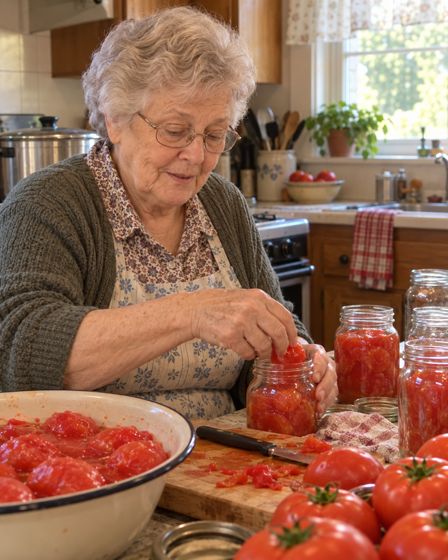
Saves about $40 a yearCuring, storing without a root cellar, freezing, and safe canning basics so nothing goes to waste.
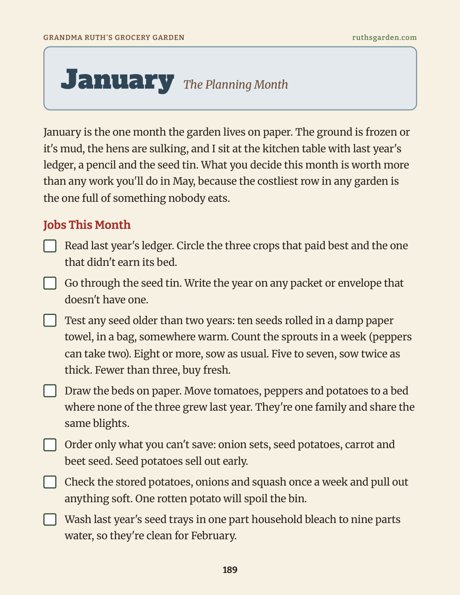
A pantry shelf for penniesMonth by month: the jobs, what to sow, and what that month's garden is worth, with a simple shift for your region.
Never miss a plantingThe nine tools Ruth actually uses, and the gadgets she's never bought in sixty years.
Saves hundreds, onceQuick-reference planting and storage charts, a printable garden ledger, and garden words explained simply.
Print and keepTap a page to see it full size.


"A spoon of Epsom salt in every hole for bigger tomatoes."
Most garden soil has all the magnesium a tomato wants. Blossom-end rot comes from uneven watering. Save the $6 and water deeply instead.
"Coffee grounds make your soil acid."
Brewed grounds are close to neutral, the acid went into your cup. They're good compost, nothing more. Your blueberries need a different trick.
"Fallen leaves make the best soil there is."
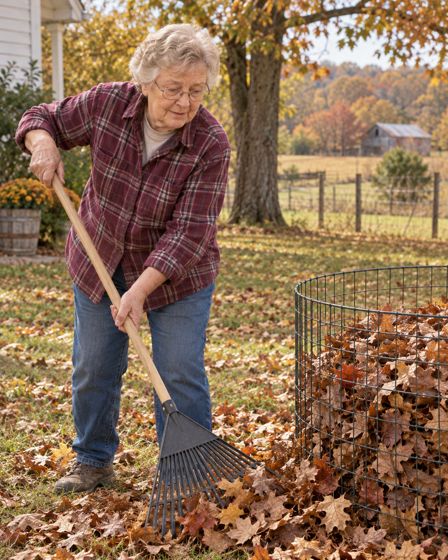
True. A wire ring of wet, shredded leaves becomes dark, crumbly leaf mould in six to twelve months. Thirty bags of soil Ruth never buys: $180 a year.
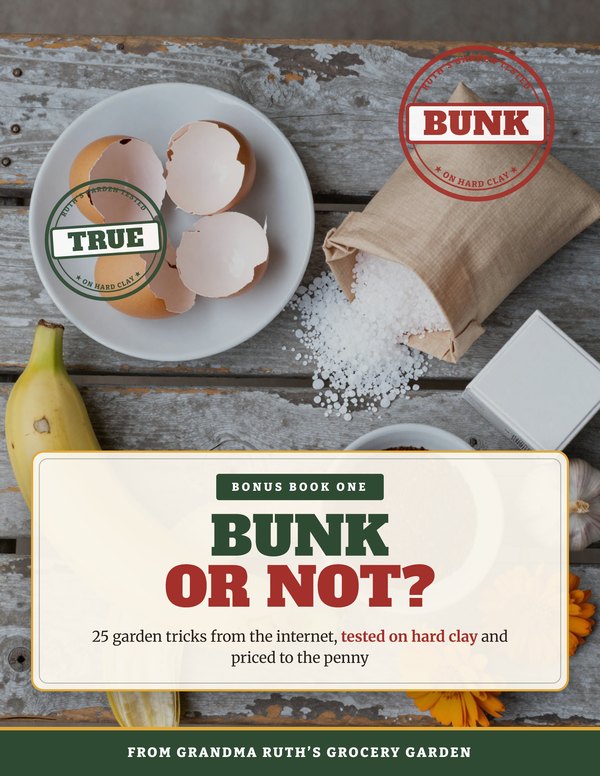
All 25 tricks, tested and priced, are in Bonus Book One.

Epsom salt, eggshells, banana peels, beer traps, vinegar weed killer and twenty more, what really happens, what to do instead, and what each one costs you.
Sold on its own for $9
Thirty years as a school cafeteria cook, so every recipe is costed: fried green tomatoes, squash casserole, freezer sauce, refrigerator pickles and safe water-bath canning for high-acid foods.
Sold on its own for $12
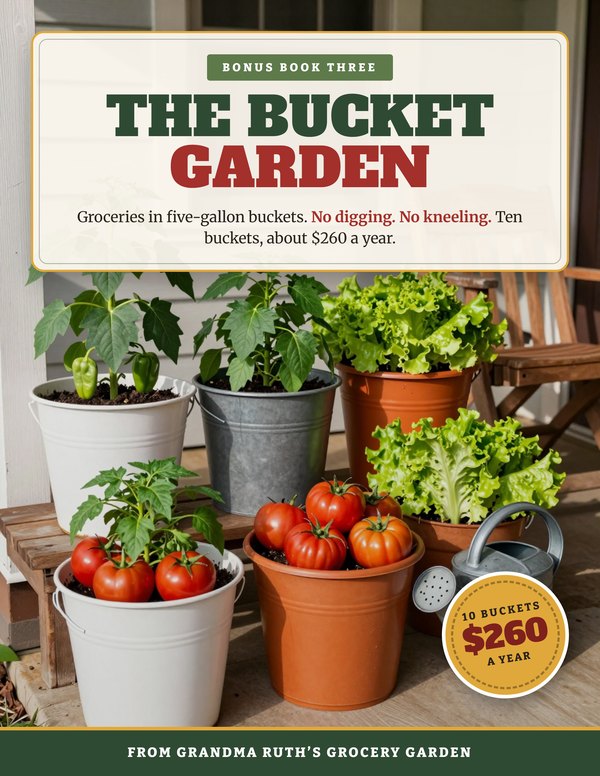
Groceries in five-gallon buckets. No digging, no kneeling. Free buckets, the cheap soil mix, what goes in each one, and why yours got too hot. Ten buckets, about $260 a year.
Sold on its own for $9
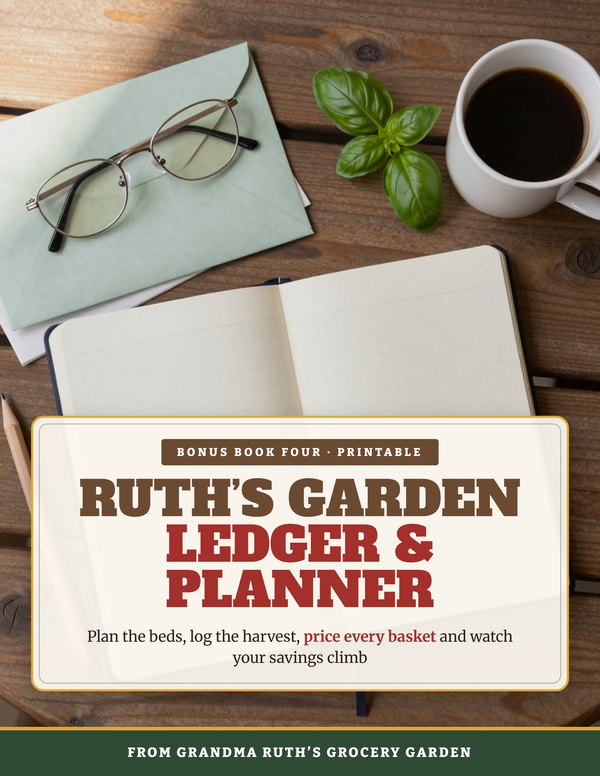
A printable binder: garden at a glance, bed-plan grids, seed box, planting log, twelve monthly pages with harvest-and-savings logs, and the year-end ledger.
Sold on its own for $9
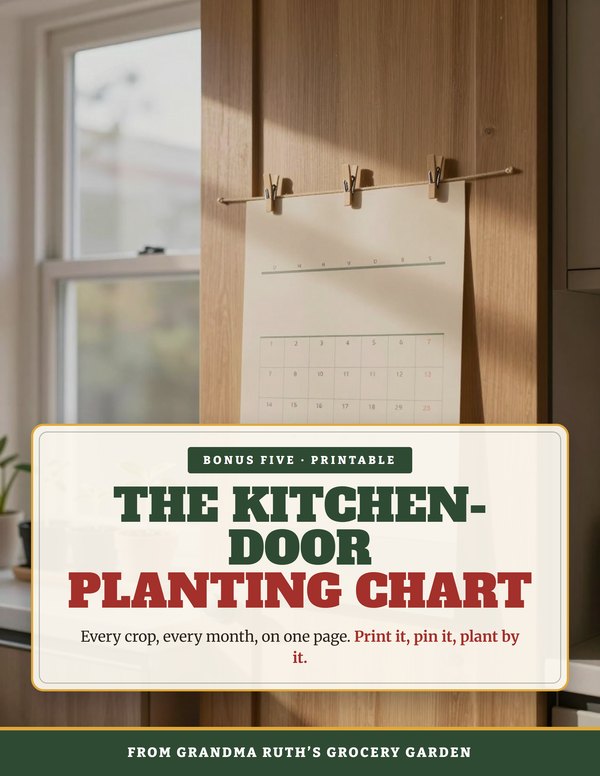
Every crop, every month, on one page, start indoors, plant out, harvest, plus the "what a square foot is worth" money chart. Print it, pin it, plant by it.
Sold on its own for $5Most garden books are set in tiny type with fancy fonts. Ruth's is large print on warm paper colours, with one idea per box and a picture on almost every spread. Read it on a tablet, or print it at home and keep it in a binder by the kitchen door.
Other garden books: Sow seeds at a depth of approximately two to three times their diameter in a well-drained, friable medium amended with organic matter, maintaining consistent moisture until germination.
Ruth's book: Plant a seed about twice as deep as it is wide. Keep it damp. That's all there is to it.
Read it. Try it. If it doesn't save you more than it cost, write to us within 30 days and you'll get every penny back. No forms, no questions, and keep the book anyway. That's how my mother did business, and it's how I do it.
No, it's a digital book (a PDF) that you download right after you pay, so there's nothing to wait for and no shipping. It prints beautifully at home, or take the file to any office-supply store and ask them to print it and punch it for a binder.
Your download page opens the moment you pay, and an email with your download links arrives within a few minutes. If you don't see it, check your spam or "promotions" folder, or write to us and we'll send it again.
Yes. You click one button and the book opens, just like a photo someone emailed you. If anything goes wrong at all, write to help@callowayruth.com and a real person will sort it out with you.
Yes. It opens on any iPad, tablet, phone or computer. The large print makes it especially easy to read on a tablet.
No. You pay once and it's yours to keep. There are no monthly charges, ever.
The charge will show as RUTHS GARDEN through our secure payment company, so you'll recognise it.
Yes. Ruth's month-by-month calendar is written for the middle of the country, with a simple shift for cooler and warmer regions, so it works anywhere in the lower 48. The book also shows you how to look up your exact frost dates.
Yes, that's exactly why Bonus 3, The Bucket Garden, is included. Ten buckets on a porch grow about $260 of groceries a year, with no digging and no kneeling.
Write to us within 30 days and we'll refund you in full. Keep the book anyway.
It happens. Just email us from the address you bought with and we'll send your links again, any time.
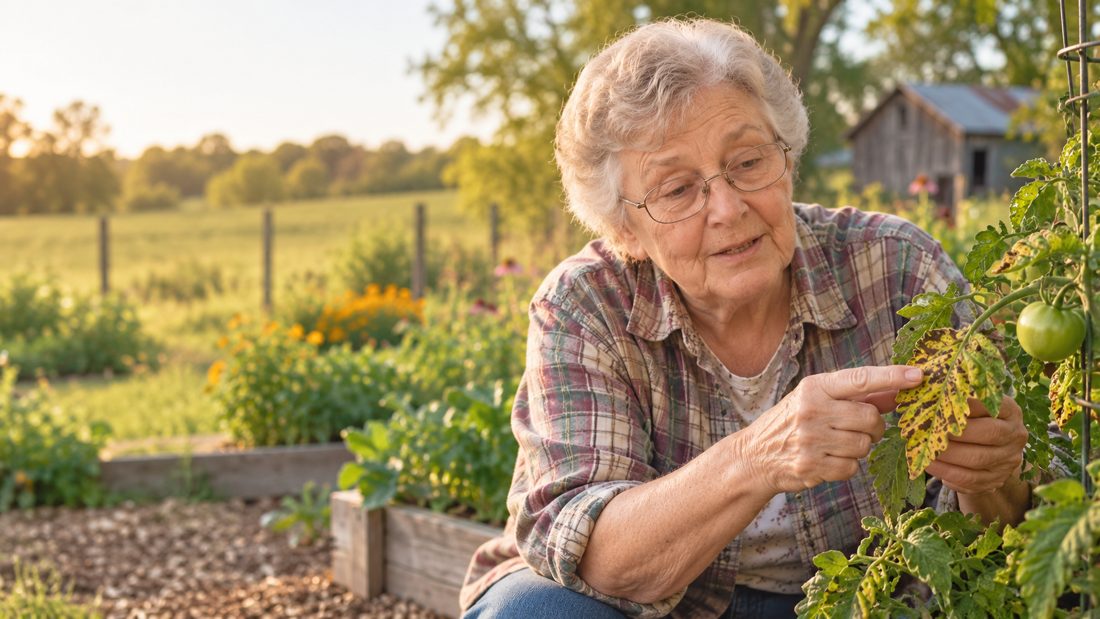
Ruth is the character who hosts Ruth's Garden, her face and voice are brought to life with AI. The garden advice is real: researched, checked against university extension guidance, and priced at 2026 store prices so you can check every number yourself.
The 10 vegetables that save you the most money, and the 5 that never will. Ruth will email it to you, along with a short note from her garden once a week.
P.S. A $3.50 packet of lettuce seed grows more than thirty bags of salad. One tomato plant pays for this whole book by the middle of July. The only garden that saves you nothing is the one you didn't plant.
P.P.S. The garlic for next summer goes in the ground this fall. If you start now, Chapter Nine will tell you exactly what to do this month.